
Published on
2 February 2016
Read time
3 mins
There has been a lot of debate about how robotic process automation software and its ability to automate business processes will – or will not - impact business process outsourcing (BPO) providers. Certainly providers will not vanish. However, when it comes to creating more sourcing choices and enabling greater overall savings, process automation tips the scales in favour of the business customer.
Since offshore services came on the scene in the late nineties, there has been one sourcing choice: take a business process activity out of a company and into a service provider’s global delivery framework. As risky as it seemed in the beginning, the cost difference between offshore and onsite labour was so great the financial upside made it a worthy choice.
As outsourcing providers evolved their delivery models the risk decreased, offshore capabilities went up and the phrase “your mess for less” came to life. At the same time, more competition meant service providers could not depend on just labour arbitrage to preserve operating margins. In response, they concentrated on leveraging process efficiencies and gains in productivity to offset the lower labour differences.
Customers also had the option to pursue those same process efficiencies themselves, but the attractive option of simply handing off those challenges to an service provider – and seeing immediate cost reductions – generally, made the decision straight forward. Now, however, the evolving technology of robotic process automation (RPA) alters the dynamics of those decisions by presenting what could be deemed “no-sourcing”.
Automation, with respect to RPA, means managing business process activities by coding robotic software to mimic the actions and tasks of employees who performed those events. The term no-sourcing highlights a key differentiator from outsourcing. The work is not moved by a BPO provider to agents in a less expensive location. Instead, the software performs the work in a (virtual) location and means employees are unnecessary. This automation of processes is completely accurate, regularly delivers cost savings of up to 70% and is almost instantly scalable,
Just as big labour savings gave the possibility for ground breaking outsourcing service providers, equally exciting savings opportunities are causing businesses to give robotic process automation a stern review. As they do so, companies realise that analysing existing processes is key to clearly determining the technology’s potential for their specific circumstances.
Only by acquiring a deep understanding of existing processes can benefits from centralisation, standardisation and optimisation be forecasted accurately. Prior to robotic software, an investment focused on an in-sourced solution rarely showed adequate returns versus the “mess for less” option to win management backing. Now, a combination of in-sourcing and no-sourcing often makes a convincing argument.
By automating business processes and enabling high returns on an in-sourced investment, robotic software makes it possible for business customers to create highly focused and effective sourcing combinations. These combinations direct sourcing choices where their strengths are maximised and their weaknesses are either minimised or avoided completely. As a result, the greatest possible savings from all sourcing choices can be achieved.
Latest news & insights


Tail Spend solutions – a platform or a service?
Ten separate client conversations in the last few weeks have started the same way: "We're not looking for yet another platform. We just need a partner to provide a service and help us get a handle on our Tail Spend." That's not a coincidence - it's a pattern worth naming. Tail Spend is often the least glamorous corner of procurement,
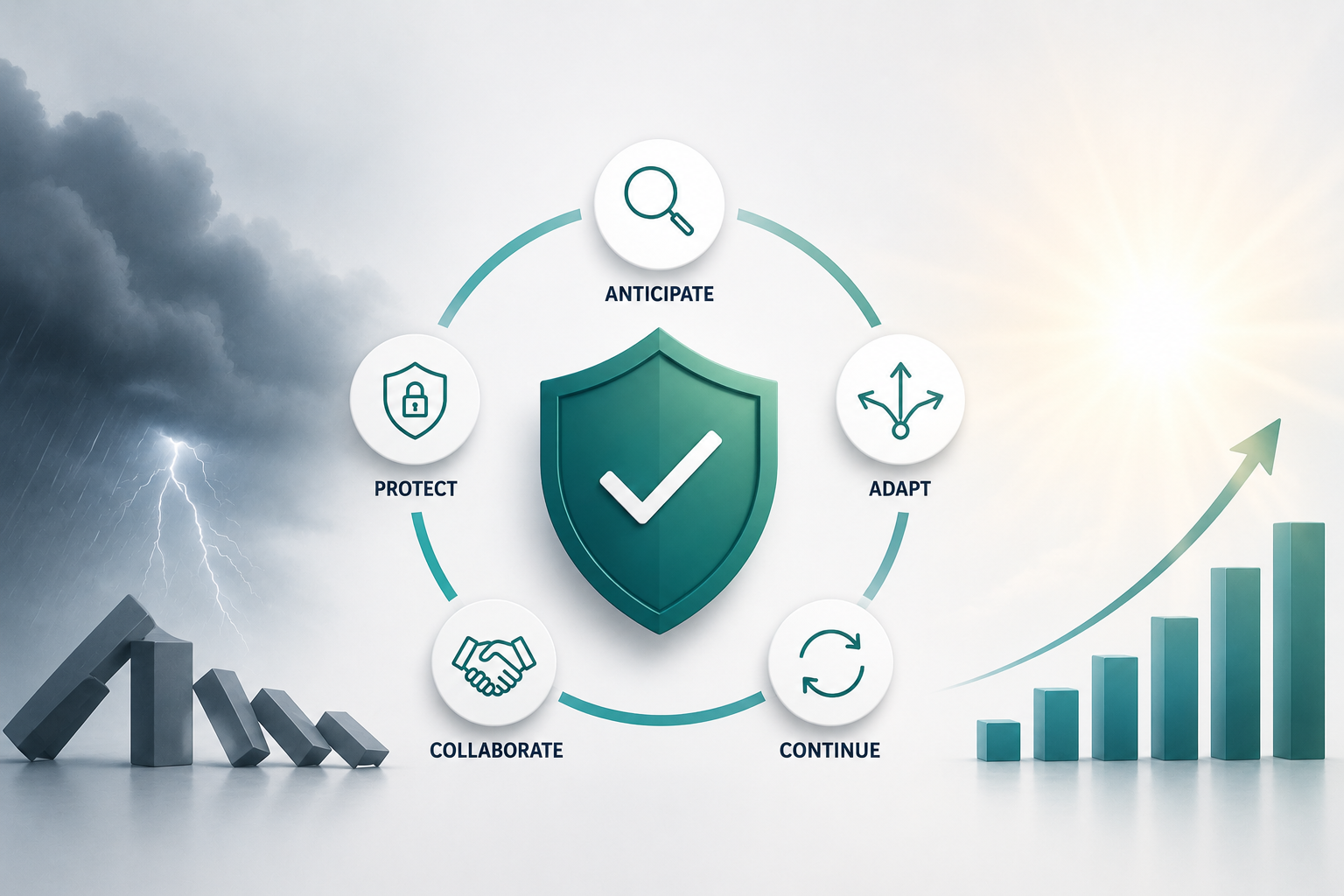
Procurement's Role in Operational Resilience
(and why most businesses are getting it wrong!) From Cost Control to Strategic Function Procurement is still too often treated as a cost-control function. Negotiate contracts, manage suppliers, drive savings, repeat. That model isn't just outdated, it's a liability. In today's operating environment, businesses that relegate procurement to a back-office function are quietly accumulating risk they can't see yet. What

When the Heat Is On: What the June 2026 Heatwave Reveals About Your Supply Chain
As temperatures across southern England breach 35°C and Amber Extreme Heat Warnings run through next week, procurement leaders need to ask a harder question than 'is our office cool enough?' The real exposure is in the supply chain and most organisations have little substantial knowledge of how vulnerable they are. Most business commentary will focus on workforce welfare - keeping