
Published on
29 June 2026
Read time
3 mins
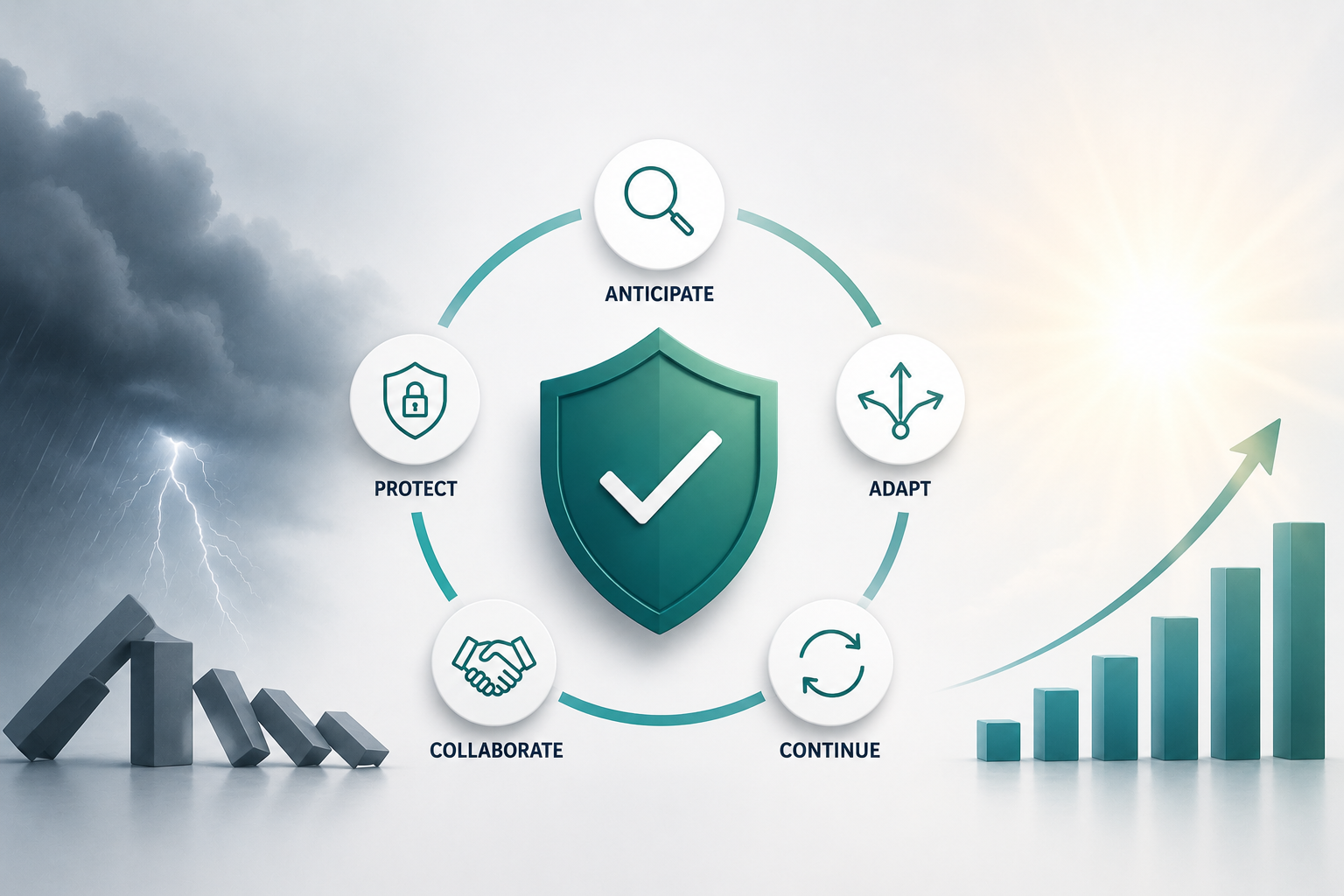
(and why most businesses are getting it wrong!)
From Cost Control to Strategic Function
Procurement is still too often treated as a cost-control function. Negotiate contracts, manage suppliers, drive savings, repeat. That model isn't just outdated, it's a liability. In today's operating environment, businesses that relegate procurement to a back-office function are quietly accumulating risk they can't see yet.
What Operational Resilience Actually Means
Operational resilience is the ability to keep functioning when things go wrong. And things go wrong through your supply chain more than almost anywhere else. Procurement manages every external dependency a business relies on, which means procurement either strengthens your resilience or undermines it. There is no neutral position.
Supplier Risk: The Gap Most Organisations Don't Know They Have
Most businesses know their Tier 1 suppliers. Far fewer understand their sub-tier dependencies, and that's where disruption typically originates. A mature procurement function maps risk beyond the first layer, diversifies supplier bases deliberately, and maintains live contingency options. When a disruption hits, the difference between an organisation that pivots in days versus one that scrambles for weeks usually comes down to preparation that was done before anyone thought they needed it.
That preparation is a procurement responsibility. If it hasn't been done, the gap exists whether you can see it or not.
Strategic Relationships Are a Commercial Asset
Transactional supplier management produces transactional results. When supply is constrained, a supplier will prioritise the customer they have a relationship with, not the one who squeezed them hardest on price. Strategic supplier relationships, built through consistent engagement, fair commercial terms, and genuine partnership, translate directly into supply security. That has a commercial value that rarely appears on a savings tracker but absolutely appears on a P&L when things tighten.
Data and Digital: Moving from Reactive to Predictive
The best procurement functions aren't waiting for problems to surface. They're using spend data, supplier performance metrics, and market intelligence to identify vulnerabilities before they crystallise into disruptions. That shift, from reactive firefighting to predictive risk management, is increasingly accessible but still underutilised. The organisations that get there first carry a structural advantage their competitors don't.
Why This Matters for Your Business
Procurement is frequently underdeveloped relative to the scale and complexity of the organisation it serves. That creates a clear opportunity: a well-structured procurement function can simultaneously reduce cost, improve supplier relationships, and substantially reduce operational risk. These aren't competing objectives. Done properly, they reinforce each other.
What Good Looks Like
Organisations that treat procurement as a strategic function, with a seat at the table, a mandate to manage risk, and the tools to act on data, are materially better positioned to absorb disruption, protect margins, and sustain performance. Those that don't are exposed in ways that may not be obvious until a supplier fails, a contract comes unstuck, or a cost base drifts beyond control.
If you're not sure which category you're in, that's usually the first sign that it may be worth finding out.
Article by Adam Brown - Consultant at 7SS
Latest news & insights

Procurement for the unenlightened: my experience as a Summer Intern with 7 Step Solutions
On my first morning at 7 Steps, I walked out of Waterloo Station with only a hazy idea of what procurement actually involved. I had searched for a definition of the industry beforehand, but the explanations I found were rather broad and unhelpful: full of vague jargon like ‘sourcing’ and ‘supplier management’ that told me nothing about what I would

10 Modern Challenges in Running Tender Processes
Good tendering practice hasn't changed much in decades. What's changed is the environment it now operates in. Here are ten challenges that are genuinely new, or newly intensified, in the last few years - and how to counter each one, whatever sector you're buying in. 1. AI-generated bidder responsesBidders now routinely run RFP questions through an LLM and submit fluent,

Tail Spend solutions – a platform or a service?
Ten separate client conversations in the last few weeks have started the same way: "We're not looking for yet another platform. We just need a partner to provide a service and help us get a handle on our Tail Spend." That's not a coincidence - it's a pattern worth naming. Tail Spend is often the least glamorous corner of procurement,