
Published on
7 November 2017
Read time
6 mins
Here we go, Pete’s about to harp on about outsourcing and robotics again. Well folks, Im sorry but its a hot topic at the moment that I cannot leave alone.
A key question I keep challenging businesses with is why outsource when you can automate? For most organizations, the answer is IT bureaucracy. Budget bottlenecks and IT’s ability to convolute any process improvement with massive waterfall technology implementations, even when the need is immediate, make automation a challenge. That said, automation looms as the perfect solution for the majority of rules-driven processes that are being outsourced today.
The Rise of Robotic Automation
Business units are constantly finding new ways to improve business processes, and so generate many requests to IT for corresponding custom applications or modifications to existing applications. But such requests often hit a wall of cost and priority: IT-based software development is driven by a fairly cumbersome (albeit admittedly valuable) set of standards and tools, and focuses first on long-term projects with high strategic impact to the organization. This makes it difficult to respond to tactical requests in a way that is cost-effective or timely enough to address business unit needs.
When IT cannot address these requests, business units typically create their own manual workarounds, often with the help of desktop tools like spreadsheets and unstructured databases. These workarounds allow these units to implement the desired process modifications, but the result is not integrated into the enterprise’s larger IT framework, and can be brittle, error-prone, and vulnerable in terms of security. Any ad hoc processes developed this way typically are not reusable for new projects. Reporting and auditing are laborious where not impossible – a potential problem for enterprises in regulated industries that are subject to compliance scrutiny. Process analysts can generally calculate average times to complete a process, but identifying bottlenecks for optimization is hindered by a lack of granular activity tracking in each of the component steps.
To help lower process execution costs – particularly in response to an unanticipated increase in workload – business units often turn to outsourcers, hiring relatively inexpensive offshore FTEs to do the work manually. But as many readers will know, outsourcing entails its own problems, including the political unpopularity of sending jobs offshore, the hidden costs of overseeing remote operations, and the complexities of managing differences in business cultures.
RPA vendors novel idea is to give business units a tool to automate these ad hoc processes on their own, addressing their custom requirements without relying on an expensive, lengthy IT development process, or hiring costly onshore workers for which they have no budget, or shipping the work offshore. They call this concept “robotic process automation,” and they refer to the custom applications produced by their software and methodology as “robots.”
These terms appropriately convey the notion of a technological replacement for a human worker – in this case, implemented as fast, cheap software that runs as a web service, a scheduled task on a virtual machine infrastructure (including environments like cloud services), or a dynamic trigger-based process using existing BPM, workflow, or messaging systems.
Cost Effective Robots: A Threat to BPO, and an Opportunity
For buyers, robotic automation has obvious appeal. It lets them quickly and cheaply automate business processes that don’t reach IT’s strategic development threshold – without having to send jobs offshore. Empowering business units to knock down their own tactical requirements reduces pressure on IT, letting it focus its expensive development resources on major software projects with high strategic value. Reducing the use of offshore FTEs frees up budget for more onshore hiring. The attractive business case explains how RPA companies have been able to garner its impressive roster of big-name customers to date.
7 Step Solutions believes that these early adopters represent a fair and realistic sample of what can be achieved with robotic automation. From there, it does not take a great leap of imagination to envision this technology having profound ramifications for the outsourcing industry, including the ecosystem of consultants, integrators, and advisors that surround it. In short, giving non-engineers the ability to quickly automate a rules-driven business process with a robot that costs less than half of an offshore FTE is a significant threat to every outsourcing firm whose value proposition rests on low human labor costs. In particular, we think robotic automation has the potential to wreak some dramatic, painful changes on the Indian outsourcers who are the current bulwark of the industry.
7 Step Solutions also sees robotic automation as a golden opportunity for BPO providers, management consultancies, and integrators to garner new customers and expand their business in their existing ones. With this tool, providers can help clients find an optimum mix of human FTEs (both onshore and offshore) and robots. A provider could enter this market quickly by providing strategy consulting, business process analysis and modeling, and implementation and support services. Robotic automation vendors that are typically small software firms will seek such partnerships in order to scale quickly to address the market opportunity. 7 Step Solutions has witnessed this in the market already.
Recommendations For Buyers
7 Step Solutions undertakes a number of activities for buying organisations at present. Here are some key activities to consider:
- Undertaking a diagnostic to identify business processes that fit the suitability requirements for robotic automation outlined above, including processes that may have moved to offshore labour already. These are then prioritised based on effort versus ease of implementation.
- Aligning the most appropriate software tool to suit the process – there are a number of tools in the market and its not always a case of one size fits all.
- Establishment of a centre of excellence to ensure a) best practices, b) a foundational standardisation for automation and c) repeatable delivery
- Now that robots have arrived, low-cost outsourcers will be forced into an unpleasant choice: cannibalize their own business, or let an innovative new entrant do it for them. Where operations are already outsourced, buyers should set the outsource partners the challenge of identifying processes that they believe could be automated. This needs to be set up in the correct way and take into account the business, contract and supplier relationship considerations. This can then be led by the outsource firm or by the customer - the latter of which will drive greater financial benefits.
Bottom-line
There is a significant amount of value an organisation can unlock from undertaking a review of its internal and outsourced operational processes.
Latest news & insights


Tail Spend solutions – a platform or a service?
Ten separate client conversations in the last few weeks have started the same way: "We're not looking for yet another platform. We just need a partner to provide a service and help us get a handle on our Tail Spend." That's not a coincidence - it's a pattern worth naming. Tail Spend is often the least glamorous corner of procurement,
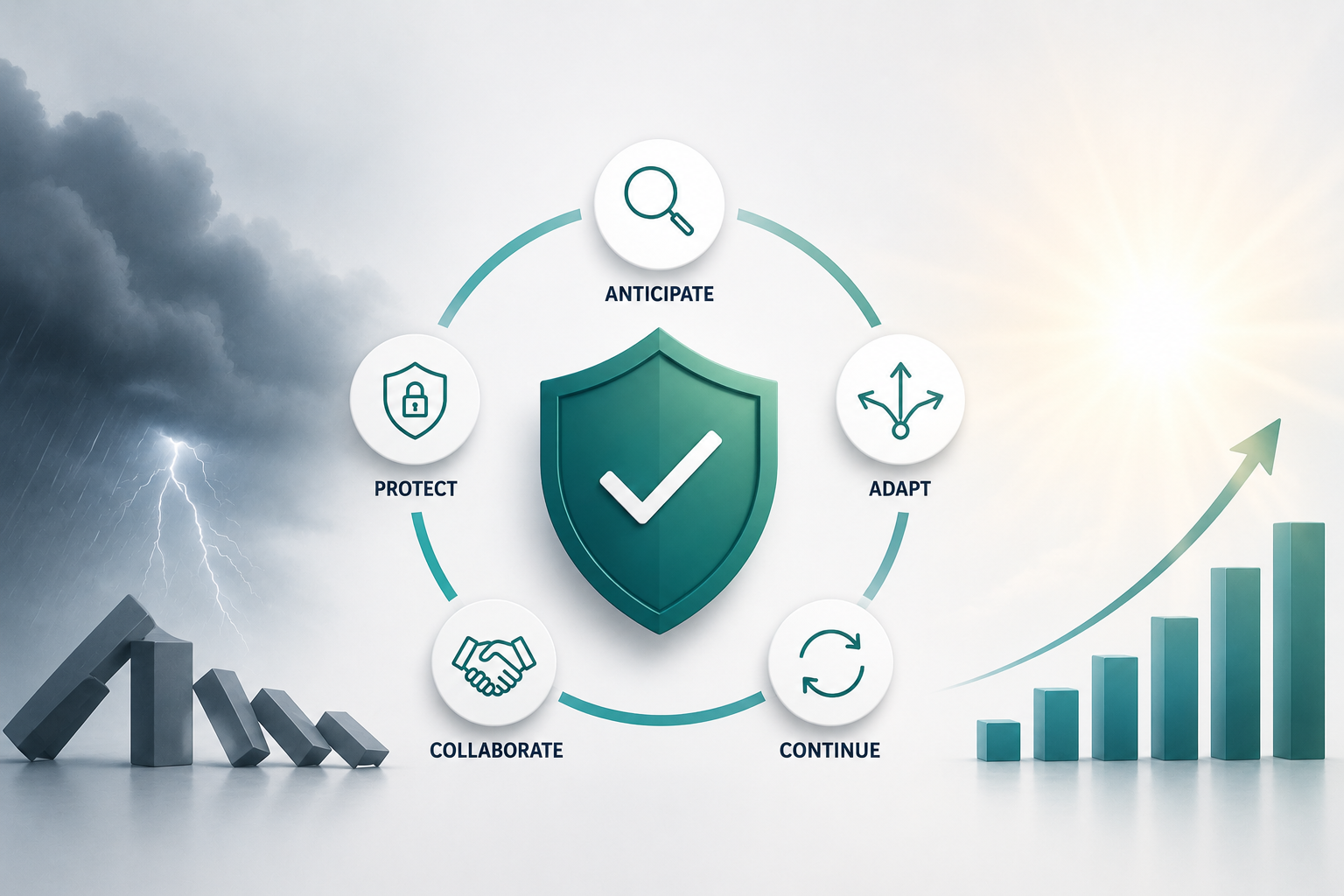
Procurement's Role in Operational Resilience
(and why most businesses are getting it wrong!) From Cost Control to Strategic Function Procurement is still too often treated as a cost-control function. Negotiate contracts, manage suppliers, drive savings, repeat. That model isn't just outdated, it's a liability. In today's operating environment, businesses that relegate procurement to a back-office function are quietly accumulating risk they can't see yet. What

When the Heat Is On: What the June 2026 Heatwave Reveals About Your Supply Chain
As temperatures across southern England breach 35°C and Amber Extreme Heat Warnings run through next week, procurement leaders need to ask a harder question than 'is our office cool enough?' The real exposure is in the supply chain and most organisations have little substantial knowledge of how vulnerable they are. Most business commentary will focus on workforce welfare - keeping