
Published on
10 November 2025
Read time
4 mins

The defining question
If you were asked, could you explain your Capex (Capital Expenditure) from your Opex (Operating Expenditure)?
Note: Opex is the money a business spends on its day-to-day running costs (services and goods such as rent, utilities, salaries, supplies, repairs, subscriptions). Capex (Capital Expenditure) is long-term investments like equipment, vehicles, technology, property).
Your business has a new Finance leader.
They wish to quickly understand how the business currently manages Capex purchases.
It is your time to shine.
As a Commercial or Procurement leader, could you rapidly answer these 10 core questions?
If the answer is No, the time is right now to explore the opportunity for value creation in your Capex spend management.
Top ten questions to answer about Capex
✅ 1. What percentage of our total spend is Capex vs Opex? (and what % do Procurement manage)
Helps Finance understand the balance between long-term investments and operational costs.
✅ 2. How are Capex purchases aligned with our budget/approval processes and strategic priorities?
Ensures capital investments support business objectives.
✅ 3. What controls and buying channels are in place to ensure accurate classification and process between Capex and Opex purchases?
Clarifies accounting treatment and compliance with financial policies.
✅ 4. What is the expected ROI or payback period for major Capex projects?
Links procurement decisions to financial performance.
✅ 5. Are there opportunities to convert Opex into Capex for longer term value?
Explores flexibility and cash flow optimisation.
✅ 6. How do our supplier payment terms differ for Capex vs Opex purchases?
Impacts working capital and liquidity planning.
✅ 7. What typical risks exist for our business in Capex purchases (e.g. delivery delays, cost overruns)?
Helps Finance anticipate and plan for potential financial exposure with Capex.
✅ 8. How are depreciation and amortisation considered?
Connects business and procurement purchasing to long-term financial reporting.
✅ 9. Are there any upcoming projects that will impact/increase Capex spend, and are we leveraging volume discounts or financing options for future Capex purchases?
Identifies business wide collaborative cost-saving opportunities.
✅ 10. How do we track and report Capex vs Opex spend, and what KPIs do we use to measure efficiency?
How do I improve Capex management?
If you are unable to answer the 10 questions, or from answering the 10 questions it is clear your business Capex processes could be improved, here are some key steps to be considered to improve your Capex management:
✅ 1. Align Capex Strategy with Business Objectives
- Ensure every investment supports long-term strategic goals (e.g. growth, innovation, market expansion).
- Avoid isolated decisions. Capex should fit into the company’s overall roadmap.
✅ 2. Conduct Rigorous Investment Analysis
- Use financial metrics like NPV, IRR, and payback period to evaluate projects.
- Include non-financial factors such as technology trends, regulatory impacts, and sustainability.
- Prioritise projects that deliver maximum value and mitigate risks.
✅ 3. Implement a Structured Approval Process
- Define clear guidelines and thresholds for Capex proposals.
- Require detailed business cases, forecasts, and risk assessments.
- Involve key departments and stakeholders for governance and accountability.
✅ 4. Adopt Multi-Year Planning & Forecasting
- Move beyond annual budgets. Plan Capex over multiple years.
- Factor in lifecycle costs, maintenance, and financing structures.
- Use scenario planning to handle market volatility.
✅ 5. Monitor and Control Expenditures
- Track project milestones, budget adherence, and ROI using KPIs.
- Implement real-time reporting tools for transparency.
- Regularly review and adjust based on performance.
✅ 6. Leverage Technology & Automation
- Consider using Capex management software for approvals, tracking, and analytics.
- Integrate AI for predictive insights and risk modelling.
- Automate workflows to reduce manual errors and delays.
✅ 7. Optimise Contracting & Execution
- Review contracting strategies to reduce costs and avoid overruns.
- Ensure clear scope, timelines, and governance in contracts.
- Conduct post-purchase evaluations and lifecycle management.
✅ 8. Strengthen Governance & Transparency
- Establish clear roles and responsibilities for Capex decisions.
- Maintain visibility across all projects to prevent scope creep.
- Regular audits and compliance checks to ensure accountability.
Managing Capex well positions Commercial and Procurement teams as a strategic value creation function that collaborates with the business and not just a cost management and process vehicle
On our homepage you will also find a Commercial Assessment you can take in 5 minutes that provides you with a personalised one-page report on your organisation’s Commercial and Procurement maturity.
If you are interested how your business can create P&L impactful savings, read our short blog Commercial thinking Procurement – is your function creating enough P&L value?
Latest news & insights


Tail Spend solutions – a platform or a service?
Ten separate client conversations in the last few weeks have started the same way: "We're not looking for yet another platform. We just need a partner to provide a service and help us get a handle on our Tail Spend." That's not a coincidence - it's a pattern worth naming. Tail Spend is often the least glamorous corner of procurement,
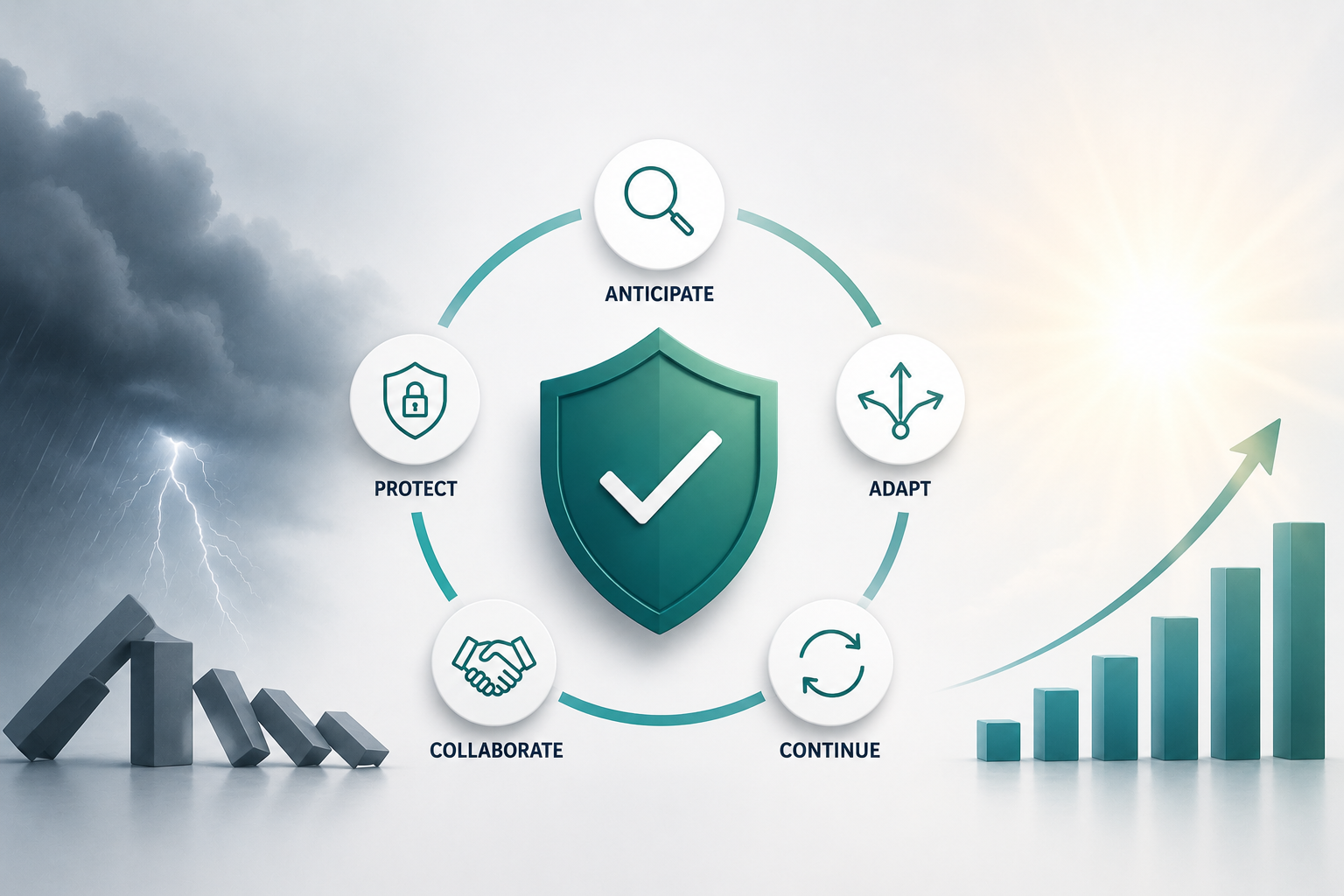
Procurement's Role in Operational Resilience
(and why most businesses are getting it wrong!) From Cost Control to Strategic Function Procurement is still too often treated as a cost-control function. Negotiate contracts, manage suppliers, drive savings, repeat. That model isn't just outdated, it's a liability. In today's operating environment, businesses that relegate procurement to a back-office function are quietly accumulating risk they can't see yet. What

When the Heat Is On: What the June 2026 Heatwave Reveals About Your Supply Chain
As temperatures across southern England breach 35°C and Amber Extreme Heat Warnings run through next week, procurement leaders need to ask a harder question than 'is our office cool enough?' The real exposure is in the supply chain and most organisations have little substantial knowledge of how vulnerable they are. Most business commentary will focus on workforce welfare - keeping